
Office Kitchen Cleaning in Saskatoon: What Should Be Included?
Office kitchen cleaning in Saskatoon workplaces takes a consistent routine because staff share counters, appliances, sinks, tables and other high-touch surfaces throughout the day. An office kitchen or staff breakroom may be one of the smallest areas in a commercial building, but it can see steady use throughout the day. Employees prepare coffee, eat lunch, fill water bottles, wash dishes, and gather between meetings. With several people using the same counters, tables, appliances, and sinks, small messes can build up quickly.
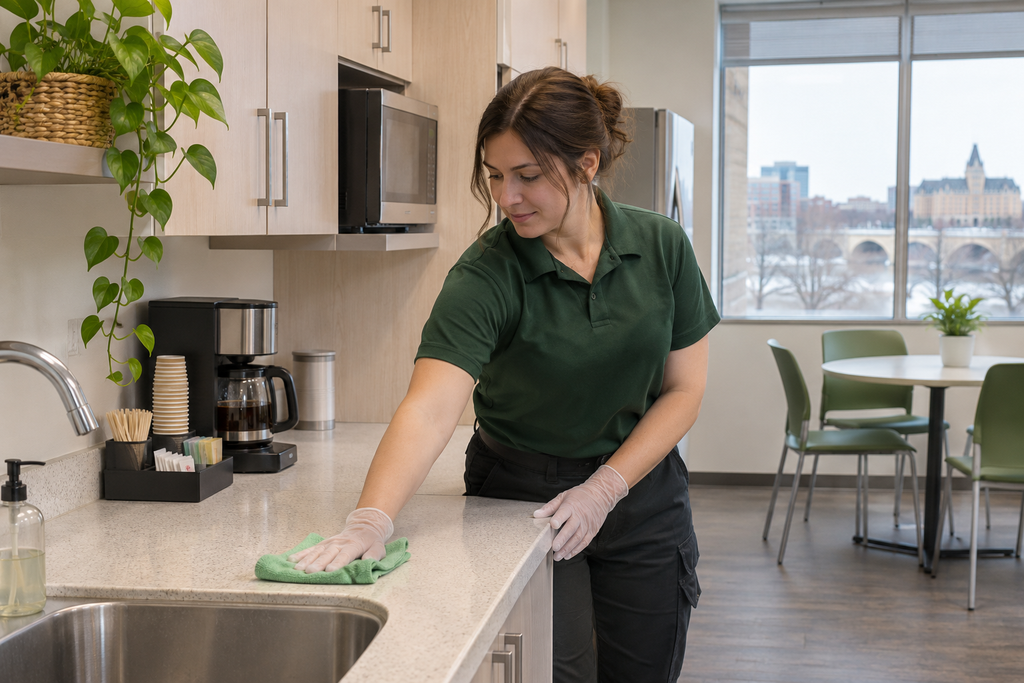
A tidy breakroom supports a more comfortable workplace. It also helps businesses present a cared-for environment to employees, visitors, and clients. Keeping the room in good condition takes more than wiping a counter once in a while. A practical cleaning routine needs to account for how many people use the space, what equipment is in it, and which tasks should happen daily or less often.
This guide explains how Saskatoon businesses can plan office kitchen and breakroom cleaning, what to include in a routine, and when professional commercial cleaning may be useful.
Why shared kitchens need a clear cleaning routine
People often assume that someone else will wipe the table, clean the microwave, or empty a full bin. Without clear expectations, that can leave the room untidy by the end of the day. Food crumbs, spills, used cups, and fingerprints may remain on surfaces that others need to use.
A written routine gives the space consistent attention. It helps cleaning staff and employees understand which tasks belong to each person. For example, employees can wash their own dishes and remove personal food, while a scheduled cleaning service can take care of routine surface cleaning, floors, bins, and other agreed tasks.
A clear plan also makes it easier to spot recurring problems. If the garbage is full every afternoon or the microwave needs frequent attention, the cleaning schedule can be adjusted to match actual use.
Start with the way the room is used
There is no single schedule that fits every office kitchen. A small workplace with a few employees may need different service from a busy office with multiple shifts, frequent visitors, or a large staff room.
Before setting a routine, consider:
How many people use the room during a typical day
Whether the workplace has one shift or several
How often employees prepare food in the kitchen
Whether clients or visitors use the space
Which appliances and surfaces are present
How quickly the garbage and recycling fill up
Whether the room has a sink, dishwasher, coffee station, or shared refrigerator
Which days of the week tend to be busiest
These details help determine how often the room needs attention. A breakroom that receives heavy use may require daily cleaning, while a lightly used space may need a less frequent service schedule with employees keeping up between visits.
Daily tasks that help keep the space ready
Daily cleaning focuses on visible mess and commonly used surfaces. The exact task list depends on the service agreement, but many workplaces benefit from covering the following items regularly:
Wipe and clean tables and countertops
Clean the exterior of frequently used appliances
Address visible spills and crumbs
Clean the sink and faucet
Empty waste and recycling bins as needed
Replace bin liners where required
Spot-clean fingerprints around handles and switches
Sweep or vacuum visible debris from the floor
Mop hard floors according to the agreed schedule
Leave the room organized and ready for the next workday
Some tasks may be handled by employees throughout the day. For example, staff can remove their own dishes, wipe up spills immediately, and keep personal food containers organized. A scheduled cleaner can then focus on the routine cleaning tasks included in the service plan.
Pay attention to the microwave and coffee area
The microwave and coffee station often show signs of frequent use. Food splashes, coffee drips, water marks, and discarded stir sticks can quickly make these areas look untidy.
A regular routine can include wiping the outside of the microwave, cleaning its interior when included in the scope of work, and wiping nearby counters. Coffee stations may need attention around the machine, mugs, supply containers, and the area where employees add cream or sugar.
The cleaning method should suit the manufacturer’s instructions and the surface material. Some equipment may have electrical components or finishes that should not be sprayed directly. Cleaning staff should use an appropriate cloth and product for the item, following product labels and workplace procedures.
If a spill happens during the day, employees should deal with it promptly when they can do so safely. Dried spills may take longer to remove and can leave the area unpleasant for the next person.
Keep the refrigerator organized with employee participation
Shared refrigerators can be harder to manage than other parts of a breakroom. Cleaning staff can wipe accessible exterior surfaces, but personal food, containers, and forgotten leftovers require a workplace policy.
Businesses can make refrigerator care easier by setting expectations such as:
Label personal food and containers
Remove expired or unwanted food on a stated day
Keep food in sealed containers
Avoid leaving spills inside the refrigerator
Assign responsibility for periodic shelf cleaning
Give employees notice before a scheduled refrigerator cleanout
A cleaning service should only handle refrigerator interiors when that work is included and the workplace has arranged how personal items will be managed. Clear instructions help prevent confusion and reduce the chance that food will be discarded without authorization. For more food and kitchen hygiene tips, see CCOHS Food and Kitchen Hygiene .
Weekly and periodic cleaning tasks
Some cleaning needs do not have to happen every day. Depending on the space and agreed scope, weekly or periodic tasks may include:
Clean cabinet fronts and cupboard handles
Wipe chair legs and table bases
Clean reachable wall marks around bins and counters
Detail appliance exteriors
Clean baseboards and edges
Move light furniture to clean underneath it
Wash reusable bins where included
Clean accessible vents or ledges
Check for buildup around the sink and faucet
The timing for these tasks should reflect actual use. A kitchen with daily food preparation may need more frequent attention to certain surfaces than a room used mainly for coffee breaks. A site visit can help identify the areas that need routine service and those that can be addressed periodically.
Floor care matters in a breakroom
Breakroom floors collect crumbs, dust, water, and other tracked-in debris. The right cleaning approach depends on the flooring material and its condition. Hard floors may need sweeping or vacuuming followed by damp mopping. Carpeted areas may need vacuuming, with periodic carpet cleaning arranged separately if required.
It is important to use a suitable method for the floor. Too much water, the wrong cleaning product, or a tool that is not appropriate for the surface may cause problems. Floors should also be left to dry as safely and promptly as possible, especially where employees may walk through the area.
Businesses should tell their cleaning provider about any flooring concerns, such as a slippery area, damaged flooring, or a spot that needs special care. This helps the cleaning plan match the room instead of relying on a one-size-fits-all routine.
Match the cleaning plan to the workplace
A useful cleaning plan explains what will be done, how often it will be done, and which tasks are the responsibility of employees. It should also account for access, timing, product preferences, and any areas that require special instructions.
For example, a service plan might include daily cleaning of the counters, tables, sink, bins, and floor, with detailed cupboard cleaning scheduled periodically. Another workplace may need a lighter routine because employees clean up after themselves and the breakroom is used less often.
The service scope should be specific. “Clean the kitchen” can mean different things to different people. Listing the surfaces, appliances, floors, and waste tasks helps everyone understand what is included. If the workplace wants interior appliance cleaning, refrigerator cleanouts, or additional detail work, those tasks should be discussed in advance.
A few simple habits employees can follow
Professional cleaning works best when the people using the room also follow basic shared-space habits. A few simple expectations can reduce mess between scheduled visits:
Wash or store dishes after use
Wipe up spills when they happen
Remove personal food and containers regularly
Put waste and recycling in the proper bins
Leave the sink clear when possible
Report leaks, broken appliances, or supply issues
Keep walkways and floor areas clear
These habits do not replace scheduled cleaning. They help keep the room usable during the day and make it easier for cleaning staff to complete their work.
What to discuss with a commercial cleaning provider
When asking for office kitchen or breakroom cleaning in Saskatoon, describe the space as clearly as possible. Helpful details include the room’s approximate size, the number of people who use it, the equipment inside, the desired cleaning frequency, and your preferred service times.
You can also ask the provider to clarify:
Which surfaces and appliances are included
Whether the floor will be vacuumed, swept, or mopped
How bins and recycling are handled
Whether interior appliance cleaning is included
How periodic detail tasks will be scheduled
What employees should do before the cleaning visit
How to request a change if the room’s use increases
A clear conversation helps create a realistic service plan and avoids misunderstandings about tasks that require extra time or special arrangements.
Office kitchen cleaning in Saskatoon
A well-maintained breakroom makes everyday routines more comfortable for staff. With a suitable schedule, clear responsibilities, and attention to the surfaces people use most, businesses can keep the room looking orderly and ready for the next break.
365 Commercial Cleaning Services Ltd provides commercial cleaning services in Saskatoon. If your office needs a cleaning plan that includes a staff kitchen or breakroom, contact us to discuss the space, your preferred schedule, and the tasks you would like included.
For recurring office cleaning, see our office cleaning plans for Saskatoon workplaces. To request a quote for your office kitchen or breakroom, use the commercial cleaning quote form.