
A janitorial cleaning schedule for offices should cover routine cleaning every workday, with a stepped-up clean once or twice per week and carpet deep cleaning every 3 to 6 months, depending on foot traffic. Restrooms, shared touchpoints and reception areas need daily attention, while less-used spaces may need less frequent detailed care. The schedule can change as your workplace’s routines and needs shift.
A practical janitorial cleaning schedule for offices keeps your workplace presentable without disrupting the workday or burdening staff with unnecessary tasks. Match cleaning frequency to how each area is used: give busy spaces regular attention and schedule periodic work separately.
This guide explains how to organize daily tasks, plan carpet care, and adjust the routine over time. It also covers how professional janitorial cleaning in Saskatoon can help maintain consistent upkeep as your team’s needs or workload change.
Key Takeaways
- Prioritize cleaning tasks by how people use each space, including shared equipment, desk surfaces and breakroom counters.
- Keep washrooms usable with regular attention to fixtures, floors, waste bins and paper supplies.
- Match carpet deep cleaning to traffic: busy entrances and hallways generally need more frequent care than private offices.
- Revisit the routine as staffing, office use and seasonal conditions change, so the checklist stays practical.
Is daily janitorial cleaning too much for small businesses?
Daily janitorial cleaning can be practical for small businesses when tasks match occupancy and use. A routine for an office under 2,000 square feet may take 15-30 minutes; larger offices may need one to three hours. Daily cleaning means routine upkeep, while periodic cleaning covers more detailed work.
Use a daily checklist for visible mess and shared touchpoints. Clean high-touch surfaces such as door handles and switches, wipe shared desk areas, and empty bins before waste accumulates. Regular attention keeps the office tidy without making every cleaning task a daily one.
- Clean washroom fixtures and floors each workday because multiple people share them.
- Wipe common-area counters and shared touchpoints because they see repeated use.
- Vacuum carpet in reception because tracked-in dirt affects appearance.
- Empty trash and recycling bins because food scraps and packaging build up.
For Canadian workplaces, align cleaning plans with applicable federal, provincial, or territorial health and safety requirements and site procedures. Requirements depend on the workplace and its hazards, so include safe product use and spill response in the written routine.
Frequency should reflect occupancy, foot traffic, and business type. Daily cleaning is recommended for businesses with 10 or more staff working each day; offices with fewer people can scale routine tasks to actual use. A stepped-up clean once or twice per week can cover work that daily upkeep doesn’t address.
To help prevent illness, clean visibly soiled surfaces and regularly address high-touch areas; follow product directions when disinfection is part of the routine. Choose a suitable cleaner, disinfectant, microfibre cloths, vacuum, and mop for the surface and task. Keep products labelled, use them as directed, and don’t mix chemicals.
When spills, waste, and dirt are left unattended, they can affect shared spaces and carpets. Improper chemical handling can expose workers to products or cause spills. A written checklist that assigns daily tasks and periodic deep cleaning clarifies responsibilities and helps keep the routine consistent.
What areas should be cleaned daily in an office?
Restrooms and breakrooms need daily attention because employees share their fixtures, counters, and appliances. A practical office cleaning checklist names each area and task so important details aren’t missed during a busy workday. Clean washroom sinks, countertops, and toilets, then sweep and mop the floor. Replenish toilet paper and paper towels, and empty the waste bin.
In the kitchen or break area, clear food scraps and discard leftover trash. Wipe counters, tables, and appliance handles, and clean the sink after use. These steps address visible mess and frequently touched surfaces. A tidy shared kitchen also creates a professional impression for visitors.
- Washrooms: clean fixtures, wipe counters, mop floors, empty bins, and replenish paper supplies.
- Breakrooms: remove leftover rubbish, wipe tables and counters, and clean shared appliance touchpoints.
- Reception: vacuum carpet and clean the welcome desk to maintain a neat arrival area.
- Shared work areas: wipe commonly used surfaces, such as meeting tables and door handles.
Set daily tasks according to how each space is used. A washroom serving staff and visitors may need closer attention than a rarely used meeting room. In winter in Saskatoon, tracked-in snow and grit can soil entrance floors, so adjust sweeping and mopping to traffic and visible dirt. Reserve less frequent detailed work for the weekly checklist instead of treating every task as daily.
Use the office cleaning checklist to record the area, task, and completion, then review it when occupancy or room use changes. This makes adjustments practical rather than relying on memory. A clear office cleaning plan can help organize recurring care around the spaces your team uses most.
Alongside daily care, schedule a more thorough office cleaning routine at least once a week. Carpets may need shampooing and thorough cleaning once or twice a year, with more frequent deep cleaning in some areas.
How often should office carpets be deep cleaned?
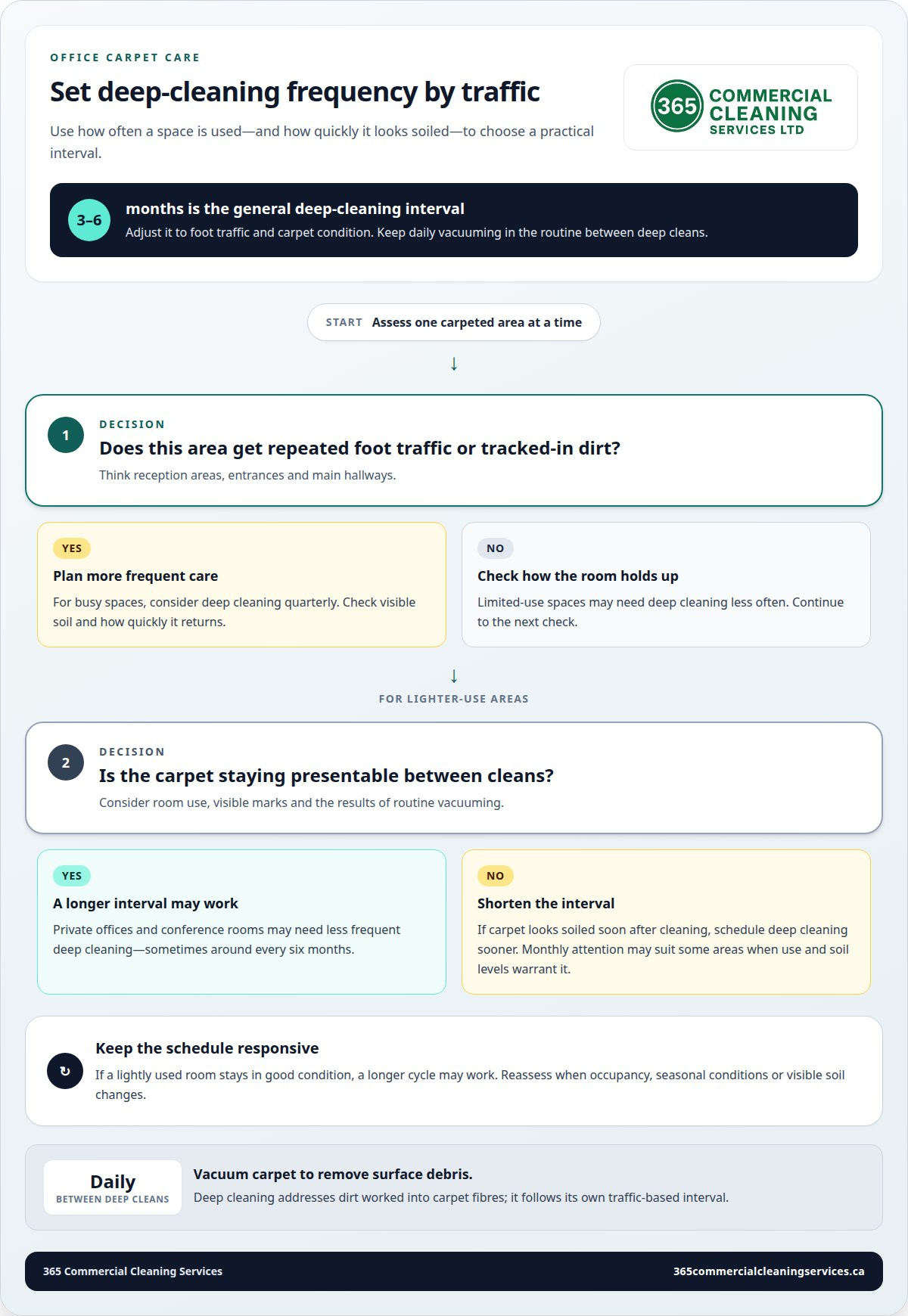
Most commercial offices benefit from carpet deep cleaning every 3 to 6 months, depending on foot traffic. Daily vacuuming removes surface debris, while deeper cleaning addresses dirt worked into carpet fibres. A reception area or main hallway may need more frequent care than a private office used by fewer people.
Consider quarterly deep cleaning for busy spaces where foot traffic repeatedly tracks dirt across carpets. Private offices and conference rooms may need deep cleaning less often, sometimes around every six months. Some carpeted areas may need monthly attention if use and soil levels warrant it. Monthly cleaning is one possible interval, not a universal requirement.
- Reception and hallways: assess traffic and visible soil, then plan more frequent deep cleaning where needed.
- Private offices: use a longer interval when limited use leaves carpets in good condition.
- Meeting rooms: consider how often groups use the space and whether spills or marks appear.
- All carpeted areas: keep daily vacuuming in the routine between deep cleans.
Monthly maintenance can also include other facility cleaning tasks. For example, a monthly checklist may cover detailed cleaning of shared spaces and windows, while carpet care follows its own traffic-based interval. Schedule a full office deep clean monthly or quarterly as needed, rather than treating every surface and floor alike.
Plan carpet care around the space’s condition, level of use, and the results of routine vacuuming. If a lobby looks soiled soon after cleaning, shorten the interval. If a lightly used room stays presentable, a longer cycle may work. Keep the schedule flexible as occupancy or seasonal conditions change.
For a consistent routine, record when each area was last deep cleaned and when its next service is planned. Track high-traffic spaces separately, then review the records monthly to identify where the schedule needs adjusting. This helps maintain carpets without assigning the same frequency to every room.
What tasks should be included in an office janitorial cleaning schedule
Separate daily upkeep from weekly, monthly, seasonal, and annual work. This keeps routine tasks visible and gives less frequent cleaning a defined place. Assign each task to an area, record its frequency, and note when it is complete so the checklist stays practical as office use changes.
- Daily: Empty trash and recycling, dust desks and shelves, and vacuum carpet. These tasks control visible debris and support a tidy workspace.
- Daily: Clean and disinfect reception welcome desks and high-touch surfaces. Regular attention helps keep shared areas presentable.
- Daily: Clean washroom sinks, countertops, toilets, and floors, then replenish paper supplies. This keeps essential facilities ready for use.
- Weekly: Clean shared equipment and give common surfaces a more detailed wipe. Regular weekly attention reaches areas that routine daily tasks may miss.
- Monthly: Schedule window washing and review carpet condition. Monthly checks help identify marks or embedded soil requiring additional care.
- Seasonally: Plan HVAC vent cleaning before the winter heating season or summer air-conditioning season. Timing it ahead of seasonal use makes the task easier to track.
- Annually: Consider stripping and waxing office floors once or twice per year. The floor’s condition and material help determine the appropriate cycle.
Include computer screens and keyboards in the plan, using methods suitable for those surfaces. Record this task separately from general desk dusting so equipment isn’t overlooked. For carpets, distinguish daily vacuuming from periodic deep cleaning. Busy entrances and hallways may need closer attention than private offices.
Review the checklist at least once per quarter and update it fully once per year. Changes in occupancy, room use, or seasonal conditions can shift priorities. A clear plan can also guide office cleaning support when your facility needs consistent care across daily and periodic tasks.
365 Commercial Cleaning Services
365 Commercial Cleaning Services Ltd helps Saskatoon offices put a practical cleaning routine into place. Its Commercial Cleaning plans are tailored to each facility and schedule, helping align recurring tasks with how your workplace is used. This can be useful when staffing patterns change, shared spaces need more attention, or daily upkeep no longer covers the facility’s needs.
Periodic Carpet & Upholstery Cleaning and Deep Cleaning & Sanitization can complement regular janitorial care. Window & Storefront Cleaning can also help maintain a clear, professional appearance. The right combination depends on your spaces, traffic, and priorities, rather than applying the same tasks at the same frequency everywhere.
Contact 365 Commercial Cleaning Services Ltd to discuss a cleaning routine that fits your office.
Make your office routine work for what comes next
A cleaning plan should be a working tool, not a fixed document that becomes outdated as the office changes. Treat your janitorial cleaning schedule for offices as a routine to refine: note which spaces need more attention, account for changes in occupancy, and adjust tasks when the layout or daily use changes.
That ongoing review helps keep cleaning practical and aligned with your team’s expectations. If coordinating the routine internally is taking time away from other responsibilities, professional support can help maintain consistency while your priorities evolve.
365 Commercial Cleaning Services Ltd can tailor cleaning plans to your facility and schedule. Contact 365 Commercial Cleaning Services Ltd to discuss a routine that suits your workplace. A clear plan is a useful starting point, and it can grow with your office.
Frequently Asked Questions
Can I adjust the schedule over time?
Yes. A janitorial cleaning schedule for offices can change as occupancy, room use, or cleaning priorities shift. For example, a team returning to shared workstations may need more attention on those areas. 365 Commercial Cleaning Services Ltd tailors plans to each facility and schedule; if your needs change, the company can review the updated scope and explain any effect on the schedule before changes are made.
How often should offices be cleaned daily, weekly, monthly, and seasonally?
Clean routine areas each workday, then plan a more detailed clean once or twice weekly. Monthly tasks can include window washing, while carpet deep cleaning generally falls every 3 to 6 months, depending on traffic. Schedule HVAC vent cleaning before the winter heating season or summer air-conditioning season. Use room condition and actual use to decide which tasks need closer attention.
What is a sample office cleaning schedule by room or area?
A sample plan can assign recurring tasks by zone: reception gets daily vacuuming and welcome-desk care; washrooms get fixture, floor, and supply checks; and the breakroom gets counter and appliance-handle cleaning. Add weekly cleaning for shared meeting-room equipment. Track carpet deep cleaning by room so a busy entrance can follow a different cycle from a lightly used office.
How can offices create a cleaning checklist and track completed tasks?
List each room, task, frequency, and completion field, then keep the checklist where cleaning work is recorded. Add a notes column for access issues or tasks needing follow-up, so missed work is visible. In Saskatoon, 365 Commercial Cleaning Services Ltd uses structured cleaning checklists, supervision, and ongoing quality inspections. A free, no-obligation quote is available for businesses planning scheduled cleaning.